
All Posts in Category: Procedures

UMBILICAL HERNIA REPAIR (2)

Umbilical (belly button) and para-umbilical hernia repair
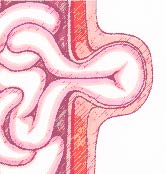
UMBILICAL HERNIA REPAIR (2)

A hernia is an abnormal protrusion on an organ through a weakness in the abdominal wall. There is a natural weakness in the abdominal wall at the umbilicus, caused by the way babies develop in the womb. If the contents of the abdomen push through, this produces a lump called a hernia. It can either be directly through the center or the umbilicus, termed an umbilical hernia, or beside the umbilicus, termed a para-umbilical hernia. Straining, for example on the toilet or lifting heavy weights, increases pressure inside the abdomen and can trigger a hernia.

Why is it necessary to operate on an inguinal hernia?

Most people with a hernia present with pain and repairing the hernia will alleviate the pain. In addition a hernia is potentially dangerous as the herniated bowel may become incarcerated leading to bowel obstruction or strangulation as a result of the blood supply to the bowel being compromised. Only surgery can repair the hernia,                                                       they will not go away on their own.

How is the hernia repaired?

Surgery to repair paraumbilical and umbilical hernias is usually performed under a general anaesthetic but can be done under local with sedation if necessary. The operation usually takes about 30 minutes. A small incision is made either above or below your umbilicus. The hernia is pushed back into the abdomen and the defect in the abdominal wall that allowed for the abdominal contents to protrude out is closed either with strong non-absorbable stitches or placement of a synthetic mesh.

What are the main risks with having the hernia repaired?

Abdominal hernia repair is a routine operation with very few risks, however all surgery has some risks. Complications occur in about 5% of cases and most are mild and easily resolved. The principal risks include recurrence, wound infection or hematoma (blood collection) and seroma (clear tissue fluid collecting in the space left by the hernia). In some instances if the hernia is large, the umbilicus may need to be resected, leaving you with a incision and no belly button. General risks of surgery includes, wound infection, unsightly scaring, deep vein thrombosis (DVT) or pulmonary embolism. There is an increased risk of post- operative complications if you are overweight or if you smoke.

What tests are done?

Most patients do not require any radiological tests. The diagnosis is made by clinical examination.
You may require routine blood tests prior to the operation as part of your anaesthetic workup

Are there any alternatives?

There are no other effective treatments for the management of inguinal hernia. If the hernia is small and does not cause you any discomfort, then leaving it alone may be entirely appropriate. Some people wear supports (trusses or corsets) to hold their hernia in. These devices are not recommended as they may cause more harm than good. There may be certain situations where your doctor may think wearing a support is a better option, but this is rare. This usually relates to the presence of other medical issues. In that instance alternative treatment strategies may be discussed.

How long will I be in hospital?

Most patients will come into hospital on the day of their operation, and will be able to go home later the same day (day stay). If there is any issue with pain control or ability to pass urine, you may be kept in over night.

What happens before the operation?

Prior to the operation you will be asked to complete an anaesthetic questioner. This will be passed onto the anesthetist that will be looking after you during the operation. Depending upon your medical status you may require an assessment or other investigations. You will need to have bloods taken in the recent weeks prior to surgery, and these may need to be repeated. You will be given specific instructions about when to stop eating and drinking, please follow these carefully as otherwise this may pose an anaesthetic risk and we may have to cancel your surgery. You should bath or shower before coming to hospital as you normally would. You do not need to shave any of the abdominal or pubic hair. You should take all your normal medication even on the day of surgery with a small amount of water. If you are on any medication that affects blood clotting you need to let the surgeon know well in advance of your surgery, as they may need to be stopped.

What happens when I arrive at the hospital?

You will be seen by the nursing staff and taken to your room. You will be asked to change into a theatre gown. The surgeon and anaesthetist will visit you and answer any questions that you have.
You will be asked to sign a consent form, and the surgeon will mark the operative site with indelible ink to avoid any potential confusion. You will be taken into the operating room by a nurse who will with you until you are asleep.

What happens after the operation?

You will be woken in the operating room after the operation has been completed, and taken into the recovery area. You will have an intravenous line in you arm that is attached to fluid, and enables the staff to give you medication. You will have an oxygen mask over your mouth that will administer supplemental oxygen. A blood pressure cuff will be on one of your arms, and intermittently inflate to measure you blood pressure. You will be able to eat and drink as soon as you are hungry after the procedure. You will normally be able to get out of bed a few hours after surgery although the nurses will assist you the first time.

How much pain will I experience post-operatively?

Most people only experience mild-to-moderate pain, which is readily controlled with oral analgesia (painkillers). You may experience some pain from your incisions, especially on movement. If you do, the nurses will give you analgesia. At the time of discharge you will be given a supply of painkillers and post-operative instructions on what to take when. After about 7 days most of the discomfort should disappear.

How long will it take to recover from the anaesthetic?

Whilst most of the effects of anaesthesia wear off in a few hours, it is common to have poor concentration and memory for a few days thereafter. It is important that you do not make important
decisions, sign legal documents or operate machinery or equipment for at least 24 hours after the general anaesthetic. You will not be able to drive home from the hospital, so you will need to make arrangements for someone to pick you up, and be available to keep an eye on you over night.

When can I return to normal activities?

You can return to normal physical and sexual activities when you feel comfortable. It is normal to feel tired after surgery, so take some rest, two or three times a day, and try to get a good nights sleep. After a week or so, you should be able to resume your normal daily activities. You should avoid any heavy lifting (more than 6kg) or straining for 6 weeks after the operation.

When can I start driving?

You should not drive for at least 48 hours after the laparoscopy. Before driving you should ensure that you could perform a full emergency stop, have the strength and capability to control the car, and be able to respond quickly to any situation that may occur. Please be aware that driving whilst unfit may invalidate your insurance, and you should check with the conditions of your insurance policy as they do vary

When can I return to work?

You can return to work as soon as you feel up to it. This will depend on how you are feeling and the type of work that you do. If you have a relatively sedentary job then you may feel ready to return within 3-4 days. If you are involved in manual labor or heavy lifting you need to remain on light duties for at least 6 weeks.

What can I eat?

There are no dietary restrictions after repair of your inguinal hernia and you may resume a normal diet as soon as you are hungry. It may take a few days before your appetite returns. When you feel hungry start with light frequent meals and then increase at your own pace.

When will my bowel movements return to normal?

It may take three or four days to have a normal bowel movement. If you have not had a bowel movement three days after surgery, a mild laxative should help. Alternatively Alpine tea, prune juice or kiwifruit may be equally effective. I

How do I care for my wounds?

The dressings are usually changed the following morning, and we leave them undisturbed until you are seen the following week. It is not an issue taking a shower, they can get wet, but avoid soaking in the bath. If they do fall off then there is no need to replace them unless you feel it is more comfortable. Steri-strips are placed over the incision sites under the dressings. These will usually fall off within a week or so. If any are still in place after a week you can gently remove them. The incisions are closed with dissolvable stitches that do not need to be removed. The incisions will probably be red and uncomfortable for 1-2 weeks and some bruising and swelling is common. After the incisions have healed there will be a small, scar like scratch. It is ok to use Bio-oil on the incisions after the first week to help reduce scar prominence.

When should I seek help?

If you have concerns then either ring the surgeon directly or the hospital for advice. If it is medical emergency then dial 111 for an ambulance to take you to an acute hospital. You should let us know if you have a discharge of blood or pus coming from your wounds, develop a fever over 38.5 ° C, vomiting that continues more than three days after surgery, inability to have a bowel movement after four days, have persistent pain not relieved with your prescribed painkillers or persistent abdominal distension (bloating of your tummy), develop increasing pain or swelling around your wounds.

Read More

UMBILICAL HERNIA REPAIR(1)

Umbilical (belly button) and para-umbilical hernia repair

A hernia is an abnormal protrusion of an organ through a weakness in the abdominal wall. There is a natural weakness in the abdominal wall at the umbilicus, caused by the way babies develop in the womb. If the contents of the abdomen push through, this produces a lump called a hernia. It can either be directly through the center or the umbilicus, termed an umbilical hernia, or beside the umbilicus, termed a para-umbilical hernia. Straining, for example on the toilet or lifting heavy weights, increases pressure inside the abdomen and can trigger a hernia.

Why is it necessary to operate on an umbilical hernia?

Most people with a hernia present with pain and repairing the hernia will alleviate the pain. In addition a hernia is potentially dangerous as the herniated bowel may become incarcerated leading to bowel obstruction or strangulation as a result of the blood supply to the bowel being compromised. Only surgery can repair the hernia, they will not go away on their own.

How is the hernia repaired?

Surgery to repair paraumbilical and umbilical hernias is usually performed under a general anaesthetic but can be done under local with sedation if necessary. The operation usually takes about 30 minutes. A small incision is made either above or below your umbilicus. The hernia is pushed back into the abdomen and the defect in the abdominal wall that allowed for the abdominal contents to protrude out is closed either with strong nonabsorbable stitches or placement of a synthetic mesh or both.

What are the main risks with having the hernia repaired?

Abdominal hernia repair is a routine operation with very few risks, however all surgery has some risks. Complications occur in about 5% of cases and most are mild and easily resolved. The principal risks include recurrence, wound infection or hematoma (blood collection) and seroma (clear tissue fluid collecting in the space left by the hernia). In some instances if the hernia is large, the umbilicus may need to be resected, leaving you with a incision and no belly button. General risks of surgery includes, wound infection, unsightly scarring, deep vein thrombosis (DVT) or pulmonary embolism. There is an increased risk of postoperative complications if you are overweight or if you smoke.

What tests are done?

Most patients do not require any radiological tests. The diagnosis is made by clinical examination. You may require routine blood tests prior to the operation as part of your anaesthetic workup

Are there any alternatives?

There are no other effective treatments for the management of umbilical hernias. If the hernia is small and does not cause you any discomfort, then leaving it alone may be entirely appropriate. Some people wear supports (trusses or corsets) to hold their hernia in. These devices are not recommended as they may cause more harm than good.
There may be certain situations where your doctor may think wearing a support is a better option, but this is rare. This usually relates to the presence of other medical issues. In that instance alternative treatment strategies may be discussed.

How long will I be in hospital?

Most patients will come into hospital on the day of their operation, and will be able to go home later the same day (day stay). If there is any issue with pain control or ability to pass urine, you may be kept in overnight.

What happens before the operation?

You will be given specific instructions about when to stop eating and drinking, please follow these carefully as otherwise this may pose an anaesthetic risk and we may have to cancel your surgery. You do not need to shave any of the abdominal or pubic hair. You should take all your normal medication even on the day of surgery with a small amount of water. If you are on any medication that affects blood clotting you need to let the surgeon know well in advance of your surgery, as they may need to be stopped.

What happens when I arrive at the hospital?

You will be seen by the nursing staff and taken to your room. You will be asked to change into a theatre gown. The surgeon and anaesthetist will visit you and answer any questions that you have.. You will be taken into the operating room by a nurse who will be with you until you are asleep.

What happens after the operation?

You will be woken in the operating room after the operation has been completed, and taken into the recovery area. You will have an intravenous line in you arm that is attached to fluid, and enables the staff to give you medication. You will have an oxygen mask over your mouth that will administer supplemental oxygen. A blood pressure cuff will be on one of your arms, and intermittently inflate to measure your blood pressure. You will be able to eat and drink as soon as you are hungry after the procedure. You will normally be able to get out of bed a few hours after surgery although the nurses will assist you the first time.

How much pain will I experience post-operatively?

Most people only experience mild-to-moderate pain, which is readily controlled with oral analgesia (painkillers). You may experience some pain from your incisions, especially on movement. If you do, the nurses will give you analgesia. At the time of discharge you will be given a supply of painkillers and postoperative instructions on what to take when. After about 7 days most of the discomfort should disappear.

How long will it take to recover from the anaesthetic?

Whilst most of the effects of anaesthesia wear off in a few hours, it is common to have poor concentration and memory for a few days thereafter. It is important that you do not make important decisions, sign legal documents or operate machinery or equipment for at least 24 hours after the general anaesthetic. You will not be able to drive home from the hospital, so you will need to make arrangements for someone to pick you up, and be available to keep an eye on you overnight.

When can I return to normal activities?

You can return to normal physical and sexual activities when you feel comfortable. It is normal to feel tired after surgery, so take some rest, two or three times a day, and try to get a good night’s sleep. After a week or so, you should be able to resume your normal daily activities. You should avoid any heavy lifting (more than 6kg) or straining for 6 weeks after the operation.

When can I start driving?

You should not drive for at least 48 hours and preferably 5-7 days after the laparoscopy. Before driving you should ensure that you could perform a full emergency stop, have the strength and capability to control the car, and be able to respond quickly to any situation that may occur. Please be aware that driving whilst unfit may invalidate your insurance, and you should check with the conditions of your insurance policy as they do vary

When can I return to work?

You can return to work as soon as you feel up to it. This will depend on how you are feeling and the type of work that you do. If you have a relatively sedentary job then you may feel ready to return within 3-4 days. If you are involved in manual labor or heavy lifting you need to remain on light duties for at least 4 weeks.

What can I eat?

There are no dietary restrictions after repair of your umbilical hernia and you may resume a normal diet as soon as you are hungry. It may take a few days before your appetite returns. When you feel hungry start with light frequent meals and then increase at your own pace. When will my bowel movements return to normal?
It may take three or four days to have a normal bowel movement. If you have not had a bowel movement three days after surgery, a mild laxative should help. Alternatively Alpine tea, prune juice or kiwifruit may be equally effective.

How do I care for my wounds?

The dressings are usually changed the following morning, and we leave them undisturbed until you are seen at the follow-up. It is not an issue taking a shower, they can get wet, but avoid soaking in the bath. Steri-strips are placed over the incision sites under the dressings. These will usually fall off within a week or so. If any are still in place after a week you can gently remove them. The incisions are closed with dissolvable stitches that do not need to be removed. The incisions will probably be red and uncomfortable for 1-2 weeks and some bruising and swelling is common. After the incisions have healed there will be a small, scar like scratch. It is ok to use Bio-oil on the incisions after the first week to help reduce scar prominence.

When should I seek help?

If you have concerns, ring the surgeon’s rooms directly. You should let us know if you have a discharge of blood or pus coming from your wounds, develop a fever over 38.5 ° C, vomiting that continues more than three days after surgery, inability to have a bowel movement after four days, have persistent pain not relieved with your prescribed painkillers or persistent abdominal distension (bloating of your tummy), develop increasing pain or swelling around your wounds.

Read More

FEMORAL HERNIA

A femoral hernia is a loop of intestine, or another part of the abdominal contents, that has been forced out of the abdomen through a channel called the ‘femoral canal’ – a tube-shaped passage at the top of the front of the thigh. The loop is usually only the size of a grape.

A femoral hernia can cause serious medical problems if left untreated, even if there are no troublesome symptoms to begin with. Treatment is by an operation to return the herniated intestine to its proper place and close the weakness in the abdominal wall.

About femoral hernias

The femoral canal, through which a femoral hernia is squeezed, is next to the point where the blood vessels and nerves pass from the abdomen into the leg. It is a potential weak spot in the abdominal wall. Intestine (bowel), or the tissue that covers it, is more likely to be forced out through the femoral canal if a weakness already exists. Increasing the pressure inside the abdomen, by activities such as standing up, coughing or straining can then trigger a hernia. Other factors that make a femoral hernia more likely to develop include:

  • Being very overweight (obese)
  •  Having a smoker’s cough
  •  Constipation
  • Carrying or pushing heavy loads

Femoral hernias tend to occur in older people. It also appears that pregnancy may weaken the abdominal tissues, making femoral hernias more common in women who have had one or more pregnancies.

Symptoms

A femoral hernia causes a grape-sized lump in the groin, although this is not always easily noticeable.

If the hernia can be manually pushed back into the abdomen it is referred to as ‘reducible’.
However, usually this is not possible and the hernia is effectively stuck in the canal. This is an ‘irreducible’ hernia and is a potentially dangerous condition. The blood supply to the herniated tissue can become crushed within the canal, cutting off its source of oxygen and nutrients. This is known as a strangulated hernia and emergency surgery must be performed to release the trapped tissue and restore its blood supply. A strangulated hernia is very painful and tender to the touch.

Once a hernia has formed it is important to seek a doctor’s advice. A truss (a type of corset designed to hold in a hernia) should not be used for a femoral hernia as it can encourage the hernia to become strangulated.

Treatment

All femoral hernias need to be treated surgically as they have a high risk of becoming  strangulated.

A femoral hernia repair is routinely performed as a day case, without the need for an overnight stay in hospital. The type of anaesthesia will depend on the exact operation and the preferences of the surgeon and patient. Femoral hernia repairs are routinely carried out under general or regional anaesthesia (where just the area being treated is anaesthetised).

The operation

The surgery is generally performed through an incision about 10cm long either over the hernia itself or on the lower abdomen. The procedure involves opening up the femoral canal, returning the loop of intestine or intestinal covering back to the abdomen, and then patching up the canal to repair the defect that let the hernia through in the first place. The top of the femoral canal may be reinforced by a mesh made of a synthetic material that does not irritate the body.

Laparoscopic surgery, also known as ‘keyhole’ or ‘minimally invasive’ surgery, may be used. If the hernia has become strangulated, and part of the intestine damaged, the affected segment of intestine may need to be removed and the two ends of healthy intestine connected. This is more complex surgery and requires a longer stay in hospital.

What are expected results after having Laparoscopic Hernia Repair surgery versus having an open abdominal surgery?

  • Decreased postoperative pain
  • Shortened hospital stay
  • More rapid return to bowel function
  • More rapid return to work
  • Minimally sized incisions with a better cosmetic result

What are the risks of having Laparoscopic Hernia Repair surgery?

As with any surgery there are risks. The risk of one of these complications is no greater than if the surgery were done with the open technique.

Complications that can occur are:

  • Bleeding
  • Infection involving the wound, blood or abdomen
  • Injury to surrounding organs such as the bladder, intestines, blood vessels, nerves or the spermatic tube that goes to the testicles (males)
  • Difficulty urinating following surgery may occur and a temporary catheter may be ordered to drain the bladder
  • Numbness and pain in the groin region may require an open surgery technique
  • Even though a hernia may be repaired, it may return You should ask your surgeon any questions you have in regards to the risk and benefits of the procedure.

What happens if Surgery cannot be performed by Laparoscopic Technique?

Sometimes it is not possible for the surgeon to use the laparoscopic technique because it may be difficult to see or handle tissue safely. The surgeon decides to perform an open procedure either before or during the surgery. The surgeon may decide to convert the laparoscopic surgery to an open procedure in certain situations and for patient safety. Though very infrequent, when conversion to an open technique occurs, it should not be considered a failure of the procedure. Factors that might increase the possibility of changing to an “open” procedure are obesity, previous abdominal surgery causing dense scar tissue, inability to see organs or bleeding during surgery.

After the procedure If the operation is a day case, most people go home once they have recovered from the anaesthetic. Anyone who has a general anaesthetic will need to arrange for a friend or relative to drive them home and stay with them for the next 24-hours. A general anaesthetic can temporarily affect co-ordination and reasoning skills, so people are advised to avoid driving, drinking alcohol or signing legal documents for 24-hours afterwards.

Before discharge, a nurse will advise about caring for stitches and bathing, and arrange a date for a follow-up appointment (about six weeks later). Once home, painkillers should be taken as advised by the doctor or nurses. Whether recovering from open or keyhole surgery, it will be necessary to take it easy for the first two or three days. The surgeon will give specific advice about resuming normal activities. In general people will be able to move around freely but should avoid strenuous exercise and lifting for at least the first few weeks. Most people continue to experience some discomfort for a few weeks after the operation, but this will gradually settle.

Deciding to have hernia repair

A femoral hernia needs to be treated to prevent strangulation, and it will not get better by itself. Surgery is the only cure for a hernia. A femoral hernia repair is generally a safe surgical procedure. However, in order to give informed consent, anyone deciding to have this operation needs to be aware of the possible side effects and the risk of complications.

Side-effects

Side-effects are the unwanted but usually temporary effects of a successful procedure. Examples include feeling sick as a result of the general anaesthetic or painkillers.

Complications

Complications are unexpected problems that can occur during or after the operation. Most people are not affected. The main possible complications are an unexpected reaction to the anaesthetic, excessive bleeding, infection or developing a blood clot, usually in a vein in the leg (deep vein thrombosis).

Specific complications of a femoral hernia repair are uncommon but can include accidental damage to internal organs, which could require a larger incision to repair. There is also a risk of abdominal bruising, although this usually settles without treatment. The chance of complications depends on the exact type of operation you are having and other factors such as your general health. Ask your surgeon to explain how these risks apply to you. What to expect afterwards If you have general anaesthesia, you will be taken from the operating theatre to a recovery room, where you will come round from the anaesthesia under close supervision. After this (or immediately after an operation under local anaesthesia) you will be taken back to your ward.

You will need to rest until the effects of the anaesthesia have passed. Your nurse will check the operation site and monitor your heart rate and blood pressure. Your groin area may feel sore and you may need painkillers. Please discuss any discomfort with your nurse. When you feel ready, you can begin to drink and eat, starting with clear fluids.

Going home

You will usually be able to go home once you have made a full recovery from the anaesthesia. However, you will need to arrange for someone to drive you home and then stay with you for the first 24-hours. You will be given instructions and advice about caring for your healing wound(s), hygiene and bathing. You will be given a contact telephone number, in case you need to ask for further advice, and your nurse will arrange a date for a follow-up appointment.

After you return home

If you need them, continue taking painkillers as advised by the hospital. General anaesthesia can temporarily affect your coordination and reasoning skills, so you should not drink alcohol, operate machinery or sign legal documents for 48 hours afterwards. Your surgeon will give you specific advice about when you can resume your normal lifestyle. In general, you will need to take it easy for the first two to three days. You should not lift heavy items or do strenuous exercise for at least a fortnight.

Follow your surgeon’s advice about driving. You shouldn’t drive until you are confident that you could perform an emergency stop without discomfort. If you are in any doubt about driving, please contact your motor insurer so that you are aware of their recommendations, and always follow your surgeon’s advice.

You may experience some discomfort in the groin area for a few weeks after the operation, but this will gradually settle and can be helped by wearing close-fitting underwear. Dissolvable stitches will disappear in about seven to ten days.

Read More

INGUINAL HERNIA REPAIR(3)

ABOUT YOUR INGUINAL (GROIN) HERNIA

Groin hernias are very common. It is estimated that a herniamay affect 1 in 4 men in their lifetime. It is much less common in females affecting only about 1%.

WHAT IS AN INGUINAL HERNIA?

INGUINAL HERNIA REPAIR (3) - 1A hernia occurs when the inside layers of the abdominal muscle have weakened, resulting in a bulge or tear. In the same way that an inner tube pushes through a damaged tyre, the inner lining of the abdomen pushes through the weakened area of the abdominal wall to form a small balloon-like sac. This can allow a loop of intestine or abdominal tissue to push into the sac. The hernia can cause severe pain and other potentially serious problems that could require emergency surgery. You may be born with a hernia (congenital) or develop one over time. A hernia does not get better over time, nor will it go away by itself.

 

HOW DO I KNOW IF I HAVE AN INGUINAL HERNIA?

INGUINAL HERNIA REPAIR (3) - 2The common areas where hernias occur are in the groin (inguinal), belly button (umbilical), and the site of a previous operation (incisional). It is usually easy to recognize a hernia. You may notice a bulge under the skin. You may feel pain when you lift heavy objects, cough, or strain during urination or bowel movements, or during prolonged standing or sitting. The bulge usually comes and goes depending on activities. The pain may be sharp and immediate or a dull ache that gets worse toward the end of the day.
WHAT CAUSES A HERNIA?

The wall of the abdomen has natural areas of potential weakness. Hernias can develop at these or other areas due to heavy strain on the abdominal wall, aging, injury, an old incision or a weakness present from birth. Anyone can develop a hernia at any age. Most hernias in children are congenital. In adults, a natural weakness or strain from heavy lifting, persistent coughing, and difficulty with bowel movements or urination can cause the abdominal wall to weaken or separate. ©Compiled by the Hernia Interest Group, SASES, 2015

HOW  IS A HERNIA TREATED?

There are a few options available for a patient who has a hernia.

INGUINAL HERNIA REPAIR (3) - 3 INGUINAL HERNIA REPAIR (3) - 3.1

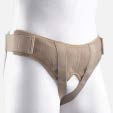
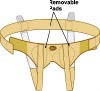
● TRUSS: Use of a truss (hernia belt) is rarely prescribed, as it is often ineffective. It may be used in patients with significant symptoms who are not candidates for surgery.

● WATCHFUL WAITING: Surgery is not advised in all cases, watchful waiting being recommended for the treatment of hernias which are not uncomfortable due to the not insignificant risk of chronic pain and the low risk of strangulation (<0.2%per year).

● SURGERY: Many hernias require a surgical procedure. As general advice in surgery, the choice of the surgeon is more important than the choice of a particular surgical technique or material.

Surgical procedures are done in one of two fashions.

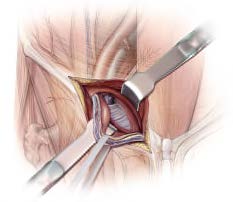
1. OPEN REPAIR: The open approach is done from the outside through a 10cm incision in the groin or the area of the hernia. The incision will extend through the skin and subcutaneous fat, which will allow the surgeon to get to the level of the defect. The surgeon will use a piece of surgical mesh to repair the defect or hole.

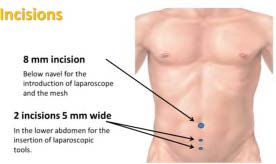
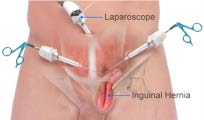
2. LAPAROSCOPIC REPAIR: In this approach, a laparoscope (a tiny telescope) connected to a special camera is inserted through a cannula, a small hollow tube, allowing the surgeon to view the hernia and surrounding tissue on a video screen. Other cannulas are inserted which allow your surgeon to work “inside.” Three 5mm incisions are usually necessary.
The hernia is repaired from behind the abdominal wall. A small piece of surgical mesh is placed over the hernia defect and held in place with small surgical staples.

OPEN ANTERIORMESH REPAIR DETAILS

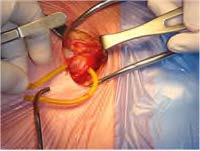
INGUINAL HERNIA REPAIR (3) - 4The most commonly performed inguinal hernia repair today is the Lichtenstein or open anterior mesh repair. A flat mesh is placed on top of the defect. It is a “tension-free” repair that does not put tension on muscles. It involves the placement of a mesh to strengthen the inguinal region. Patients typically go home within a few hours of surgery, or the following day and often require little pain medication. ©Compiled by the Hernia Interest Group, SASES, 2015


LAPAROSCOPIC REPAIR DETAILS

INGUINAL HERNIA REPAIR (3) - 5 INGUINAL HERNIA REPAIR (3) - 6


There are mainly two methods of laparoscopic repair (i) transabdominal preperitoneal (TAPP) and (ii) Totally extraperitoneal (TEP) repair. When performed by a surgeon experienced in hernia repair, laparoscopic repair causes fewer complications than Lichtenstein, particularly less chronic pain.
However, if the surgeon is experienced in general laparoscopic surgery but not in the specific subject of laparoscopic hernia surgery, laparoscopic repair is not advised as it causes more recurrence risk than Lichtenstein while also presenting risks of serious complications, such as organ injury. Many surgeons are moving to laparoscopic methodologies as they cause smaller incisions, resulting in less bleeding, less infection, faster recovery, reduced hospitalization, and reduced chronic pain. Laparoscopic Mesh Surgery, as compared to Open Mesh Surgery.

LAPAROSCOPIC SURGERY COMPARED TO OPEN SURGERY

Advantages

  • Quicker recovery
  • Less pain during first days
  • Fewer postoperative complications
  • Less risk of chronic pain

Disadvantages

  • Needs highly experienced surgeon
  • Longer operating time
  • Increased recurrence if surgeon not experienced
  • There is no difference in cost between laparoscopic and open repair as the increased costs of operation are offset by the decreased recovery period. Recurrence rates and length of the
    operation are identical when an experienced surgeon performs the laparoscopy. ©Compiled by the Hernia Interest Group, SASES, 2015

WHAT ARE THE COMPLICATIONS OF HERNIA REPAIRS?

Complications of hernia surgery do occur and including minor complications may be up to 10%. They include, but are not limited to, minor bleeding, scrotal haematoma, wound infection, mesh infection, changes in skin sensation, foreign-body sensation, chronic pain, ejaculation disorders, mesh migration, formation of internal scars, damage to or erosion of mesh into abdominal organs. Such complications may only become apparent weeks or years after surgery. Recurrence of the hernia may also occur in a proportion of cases.

ARE YOU A CANDIDATE FOR LAPAROSCOPIC HERNIA REPAIR?

Only after a thorough examination can your surgeon determine whether laparoscopic hernia repair is right for you. The procedure may not be best for some patients who have had previous abdominal surgery or have underlying medical conditions.

WHAT IF THE OPERATION CANNOT BE DONE BY THE LAPAROSCOPIC METHOD?

In a small number of patients the laparoscopic method cannot be performed. Factors that may increase the possibility of choosing or converting to the “open” procedure may include obesity, a History of prior abdominal surgery causing dense scar tissue; inability to visualize organs; or bleeding problems during the operation. The decision to perform the open procedure is a judgment decision made by your surgeon either before or during the actual operation. When the surgeon feels that it is safest to convert the laparoscopic procedure to an open one, is not a complication, but rather a sound surgical judgment. The decision to convert to an open procedure is strictly based on patient safety.

WHAT SHOUD I EXPECT AFTER HERNIA SURGERY?

INGUINAL HERNIA REPAIR (3) - 7Following the operation, you will be transferred to the recovery room where you will be monitored for 1-2 hours until you are fully awake. Once you are awake and able to walk and are able to freely pass urine, you may be sent home, although some hospitals keep patients overnight. With any hernia operation, you can expect some soreness mostly during the first 24 to 48 hours. You are encouraged to be up and about the day after surgery.With laparoscopic hernia repair, you will probably be able to get back to your normal activities within a short amount of time. These activities include showering, driving, walking up stairs, lifting, working and engaging in sexual intercourse. Recovery after open surgery takes a little longer, but you should be able to do most things as normal within 2 weeks. ©

WHEN SHOULD I CALLMY DOCTOR?
BEFORE SURGERY

  • Severe continuous pain
  • Redness of the hernia
  • Increased Tenderness of the hernia
  • The hernia won’t go away even with rest and gentle pressure
  • The bulge is persistent and accompanied by vomiting and constipation

AFTER SURGERY

  • Persistent fever over 38,5 C
  • Bleeding from the wound
  • Increasing abdominal or groin swelling
  • Pain that is not relieved by your medications
  • Persistent nausea or vomiting
  • Inability to urinate
  • Chills
  • Persistent cough or shortness of breath
  • Pus from the incision
  • Redness around your incisions that is worsening
  • You are unable to eat or drink liquids
Read More

INGUINAL HERNIA REPAIR(2)

GENERAL INFORMATION

An inguinal hernia is a bulging out of the tissues in the groin area. Some hernias allow structures to pass down into the scrotum. The bulge consists of intestine and/or fatty tissue which has slipped into the hernia sack. A hernia may be reducible, irreducible, obstructed or strangulated.

COMMON SIGNS AND SYMPTOMS

Usually there is a bulge with or without vague aching in the area. Most of the time the bulge can be pushed back or reduces itself when you lie down. When the hernia is complicated the bulge can be very tender.

TREATMENT

The best treatment for a hernia is to repair it by operation. There are different techniques by which a hernia can be repaired. Your doctor will discuss with you the technique he uses. The purpose of an operation is to reduce the hernial contents, to remove the hernial sac and in some manner to strengthen the weakened muscles and tissues.

PRE-OPERATIVE PREPARATION

  •  Make sure your doctor knows what medicines you take, especially medicines which may affect blood clotting
  • Your doctor may decide to investigate or treat associated problems which may affect the success of the operation. This refers mostly to smoking, coughing, difficulty with passing urine and  difficulty with passing stools.
  • Do not eat or drink anything for six hours before the operation. After admission to hospital you may be required to shower, bath and be shaved. You may be given a sedative before the  operation.

OPERATION

The operation may be done under local or general anaesthetic.
Your doctor will discuss this with you. The operation usually takes approximately one hour.

POST-OPERATIVE CARE

After the operation you will be observed in a recovery area. You will be monitored. You will then return to the ward. You will be given medicines to control pain. Your doctor will discuss with you whether you may be discharged the same day or whether you will be required to stay in hospital overnight. Arrangements will be made for removal of your stitches and for follow up visits to your doctor.

HOME CARE

Your doctor will discuss with you what you may do after the operation. Strenuous activity should be limited for a few weeks. You may eat as you wish but try and keep to normal bowel habits. Your doctor will discuss when you may return to work.

COMPLICATIONS

  1.  Complications are not common after an INGUINAL HERNIA REPAIR, but you must be aware of the following possible complications.
  2.  A bleed or haematoma at the site of an INGUINAL HERNIA REPAIR does sometimes occur. Depending on the extent of this bleed, this does sometimes need a repeat operation to evacuate     thehaematoma.
  3. The wound of an INGUINAL HERNIA REPAIR does occasionally become infected. How that is managed will depend on your doctor. It may necessitate dressings or other active  management.
  4. Occasionally the nerves supplying the skin around the wound and in the region of the upper thigh and the scrotum are injured. This may lead to temporary or permanent numbness in the  area.
  5. Injuries to the testes or structures to and from the testes are possible, but very rare. When this occurs, the testis may swell and later shrink.
  6. Systemic complications like deep venous thrombosis and pulmonary embolism are rare, but possible after any operation or anaesthetic.
  7. The incidence of recurrence of a hernia after a repair varies between 1% and 10%.
Read More

INGUINAL HERNIA REPAIR(1)

This leaflet is for people who are having or thinking of having an Inguinal Hernia Repair. Your care may differ from what is described here because it is adapted to meet your individual needs, so it’s important to follow your surgeon’s advice.

What is an Inguinal Hernia?

An Inguinal Hernia is a lump in the groin that occurs when part of the intestine pushes through a weakness in the muscles of the abdominal wall. Inguinal Hernias are most common in boys and men. They may be present at birth or can develop later in life, when straining, heavy lifting, coughing or obesity increases the pressure within the abdomen, applying strain on the muscles in the groin area. A hernia is not dangerous in itself, but there is a risk that it will become irreversible. This can result in the blood supply becoming restricted to the hernia, causing life-threatening conditions such as gangrene and peritonitis. If it’s not treated, a hernia is likely to get larger and become more uncomfortable. It may result in the bowel becoming obstructed. In most cases, a hernia repair operation is recommended.

Hernia repair operation

A hernia repair is usually carried out as a day case, or with one night hospital stay. The aim of a hernia repair operation is to push the intestine back in place and strengthen the abdominal wall. There are two main types of inguinal hernia repair – open and keyhole (laparoscopic). In most cases, the operation is an open repair, which involves a small cut in the groin. Sometimes, when there are hernias on both sides of the groin, or the hernia is a recurrence keyhole surgery is recommended. A general anaesthetic may be used; this means you will be asleep during the operation.

Preparing for your operation

If you normally take medication (e.g. tablets for blood pressure), continue to take this as usual, unless your surgeon specifically tells you not to. If you are unsure about taking your medication, please contact your surgeon. Before you come into hospital, you will be asked to follow some instructions.
Follow the fasting instructions in your admission letter. Typically, you must not eat or drink for about 8 hours before general anaesthesia.

At the hospital, your nurse will explain how you will be cared for during your stay, and will do some simple tests such as checking your heart rate and blood pressure, and testing your urine. You may also have your groin area shaved. Your surgeon and anaesthetist will usually visit you before your operation. This is a good time to ask any unanswered questions that you might have.

About the operation
Open surgery

Once the anaesthetic has taken effect, a single cut (about five to 10 cm long) is made in your groin, and the bulge is pushed back into place. Your surgeon may stitch a synthetic mesh over the weak spot to strengthen the wall of the abdomen. The skin cut is then closed with dissolvable stitches.

Keyhole surgery

Three small cuts (1-2 cm long) are made on your abdomen under general anaesthesia. Your surgeon will insert a tube- like telescope camera to view the hernia by looking at the pictures it sends to a video screen. The hernia is repaired using specially designed surgical instruments passed through the other cuts. A synthetic mesh will be used to strengthen the wall of the abdomen. The skin cuts are closed with dissolvable stitches. The operation takes 30 to 50 minutes depending on the technique used.

Deciding on having an inguinal hernia repair

Inguinal hernia repair is a commonly performed and generally safe operation. For most people, the benefits, in terms of reduced discomfort, are much greater than the disadvantages. However, all surgery carries an element of risk. In order to make an informed decision and give your consent, you need to be aware of the possible side-effects and the risk of complications.

Side-effects

These are the unwanted but mostly temporary effects of a successful treatment. An example of a side-effect is feeling sick as a result of the anaesthetic or painkillers.
These side-effects can be milder after keyhole surgery, and usually clear up during the first week, without further treatment.

Complications

This is when problems occur during or after the operation. Most people are not affected but the main possible complications of any surgery are an unexpected reaction to the anaesthetic, excessive bleeding, infection or developing a blood clot in a vein in the leg (deep vein thrombosis). To help prevent this, most people are given compression stockings to wear during the operation. Complications may require further treatment such as returning to theatre to stop bleeding, or antibiotics to deal with an infection.

What are the risks of the surgery?

Laparoscopic hernia repair is a very safe operation for most patients. However, a small number of patients develop complications. Most of these are minor complications, but very rarely they can be serious. It is important that you are aware of these potential complications, so that you can make an informed decision about treatment. You can discuss any concerns you may have with your surgeon. Any operation carries a risk of the complications which include the following:

Risks related to having a general anaesthetic ,are usually only a problem if you have a pre-existing medical condition affecting your health:

  • Heart problems
  • Breathing difficulties
  • An allergic reaction to medication or anaesthetic
  •  A blood clot forming in a vein or the lungs

Risks of laparoscopic surgery:

  • Damage to surrounding areas or tissues, such as the bowel
  • Excessive bleeding
  • Infection of wounds or deep seated infection

Risks of laparoscopic groin hernia repair

  • Many patients develop a fluid swelling in the area of the hernia after surgery, called a seroma. This tends to resolve itself with time, but can occasionally need drainage
  • A very small number of patients may develop infection
  •  Some discomfort after surgery should be expected, but a very small number of patients can develop persistent pain in the groin after surgery
  • As with any form of hernia repair, there is a small risk that the hernia may recur in the future
  • Bruising in the groin or around the scrotum is fairly common, but should not be unduly painful
  • Occasionally some patients may be unable to pass urine after a hernia repair.

The risk of complications may be increased in :

  • Older patients
  • People who are overweight, smoke or consume excessive amounts of alcohol
  • People taking certain types of medication e.g. Warfarin

Are there any alternatives to surgery?

There is no acceptable non–surgical medical treatment for a hernia. A hernia does not get better over time, nor will it go away by itself. The use of a truss (a hernia belt) can keep the hernia from bulging, but is usually only recommended for patients who are not fit for surgery. The only permanent remedy for the condition is to repair the hernia surgically.

What would happen if the hernia was left untreated?

The long–term course is for a hernia to become steadily worse. There is also the risk of the hernia becoming strangulated.

What are the benefits of surgery?

The main benefits are the relief of pain and discomfort caused by the hernia and avoidance of future strangulation.

Read More

LAPAROSCOPIC RECTOPEXY

Definition :

Procedure for the correction of rectal prolapse

Introduction :

Rectal prolapse is a fairly uncommon procedure. As a result, there is a paucity of data regarding the treatment of this condition. Given the wide range of proposed surgical procedures to correct this (each proposing equal efficacy) it is extremely difficult to recommend one procedure above all other. Treatments are based on correcting the proposed causative mechanisms:

  • Abnormally deep pouch of Douglas
  • Pelvic floor dysfunction
  • Pudendal nerve neuropathy
  • Poor fixation of rectum

Indication For Procedure:

Full thickness protrusion of the rectum through the anus. In patients with constipation, consider performing a sigmoid resection as well

Contraindications:

Unfit patient
Untreated causative factor (obstructive urinary pathology, colonic tumours/polyps)

Pre-Operative Investigations :

  • Clinical diagnosis
  • Prior colonoscopy to exclude other colonic pathology
  • Defaecogram (if available)
  • Antibiotic prophylaxis
  • DVT prophylaxis for at risk patients

Length of stay (LOS): 3-5 days
Level of Care: General ward

Advantages :

Reduced postoperative pain, Improved cosmesis, Reduced hospital stay

Disadvantages :

Prolonged operating time, Increased equipment costs

Technical Recommendations :

There is at present no consensus as to which surgical corrective procedure is superior (viz. suture vs mesh rectopexy).There is no agreement on which approach is better (viz. laparotomy, laparoscopy or perineal). There is no agreement on how extensively to mobilize the rectum (division or preservation of lateral ligaments).
At present, there is only evidence available suggesting that laparoscopic rectopexy can be performed safely and effectively, but as yet there is no data recommending which
patients would best benefit from the laparoscopic approach.

Read More

ABDOMINO-PERINEAL RESECTION

GENERAL INFORMATION

An abdomino-perineal resection is the removal of the lowest part of the large bowel including the anus. The anus is stitched closed. This operation is usually done to remove a cancer of the lowest part of the bowel. A permanent colostomy (bag) is also always made. Your doctor would have discussed the details with you.

DIAGNOSIS

You presented to your doctor with symptoms relating to rectal disease, usually constipation and blood in your stool. You were possibly also investigated with a colonoscopy and/or a barium enema. Your doctor has decided that it is appropriate to treat you by means of an abdomino-perineal resection as your cancer is too low in your bowel to allow him, after removing the cancer, to join your bowel ends together again.

PRE-OPERATIVE PREPARATION

  • You will need to have your large bowel cleansed before the operation.
  • Your doctor will explain to you whether he wants this done at home or whether he needs you to be admitted to hospital for bowel preparation.

This preparation is very important.

  • The optimum site for your colostomy will be marked before the operation. This is usually done by one of the stomal therapy sisters.
  • Make sure your doctor knows what medicines you take, especially medicines which may affect blood clotting.
  • You must not eat or drink anything for 8 hours before the operation.

THE OPERATION

  • You will be asleep for the operation.
  • The operation usually takes 2 to 3 hours.

POST-OPERATIVE CARE

  • You will wake up in the recovery room or in the intensive care unit.
  • You will have an infusion into your arm or neck. You may have a tube through your nose into your stomach. You will have a catheter in your bladder. The anaesthetist may have decided to do an epidural on you for pain control.
  • When you are well enough to leave the intensive/high care unit you will be returned to your usual hospital bed.
  • At an appropriate time your stitches will be removed.

HOME CARE

  • You will be instructed to what extent you are allowed to walk around.
  • You will be instructed regarding the care of your colostomy
  • You will be instructed regarding bathing and showering.
  • You will be instructed by your doctor regarding driving and returning to work.

COMPLICATIONS

  • An abdomino-perineal resection is a major abdominal operation and complications do occur. You must be aware of the following possible complications.
  • The colostomy sometimes gives problems like necrosis or narrowing and may need to be refashioned by means of another operation.
  • Wound infections of the abdominal or perineal wounds occur fairly commonly. If this happens, your doctor will decide how best to manage it.
  • Intra-abdominal complications or infections can occur which may necessitate a re-operation.
  • Chest infections are fairly common after this operation. This is the reason that your doctor will probably order chest physiotherapy.
  • In a man, it is quite common for this operation to have an adverse effect on your sexual activities
  • Deep vein thrombosis, pulmonary embolism and heart attacks are possible after any major operation.
Read More

ANTERIOR RESECTION

GENERAL INFORMATION

An anterior resection is the removal of the lowest part of the large bowel usually with joining of the two ends, very close to the anus. This operation is usually done to remove a cancer of that part of the bowel. Sometimes it is combined with making of a pouch just above your anal canal and sometimes also with making a diverting stoma in your bowel (a bag). Your doctor would have discussed with you exactly what he proposes to do. Keep in mind that his findings at operation may change his proposed operation.

DIAGNOSIS

You presented to your doctor with symptoms relating to rectal disease. You were possibly also investigated with a colonoscopy and/or a barium enema. Your doctor has decided that it is appropriate to treat you by means of an anterior resection of your rectum.

PRE-OPERATIVE PREPARATION

  • You will need to have your large bowel cleansed before the operation.
  • Your doctor will explain to you whether he wants this done at home or whether he needs you to be admitted to hospital for bowel preparation.

This preparation is very important.

  • Make sure your doctor knows what medicines you take, especially medicines which may affect blood clotting.
  • You must not eat or drink anything for 8 hours before the operation.

THE OPERATION

  • You will be asleep for the operation.
  • The operation usually takes 2 to 3 hours.
  • Your doctor would have discussed with you whether he proposes to give you a temporary bag (colostomy) or whether he proposes to do an anastomosis without the need for a bag.

POST-OPERATIVE CARE

  • You will wake up in the recovery room or in the intensive care unit.
  • You will have an infusion into your arm or neck. You may have a tube through your nose into your stomach. You will have a catheter in your bladder. The anaesthetist may have decided to do an epidural on you for pain control.
  • When you are well enough to leave the intensive/High care unit you will be returned to your usual hospital bed.
  • At an appropriate time your stitches will be removed.

HOME CARE

  • You will be instructed to what extent you are allowed to walk around.
  • If you have a colostomy (bag), you will be instructed regarding its care
  • You will be instructed regarding bathing and showering.
  • You will be instructed by your doctor regarding driving and returning to work.

COMPLICATIONS

  • An anterior resection is a major abdominal operation and complications do occur. You must be aware of the following possible complications.
  • Even if your doctor has decided that he is going to do a resection and anastomosis, you must be aware of the fact that sometimes a situation may arise while you are under anaesthetic that may make your doctor decide that it would be safer for you if he gave you a colostomy.
  • The most important complication is a leak from the anastomosis. This may necessitate re-operation or may lead to an intestinal fistula. It may lead to a major intra-abdominal infection and peritonitis. It may lead to intra-abdominal abscesses.
  • Wound infections of the abdominal wound occur fairly commonly. If this happens, your doctor will decide how best to manage it.
  • Intra-abdominal complications or infections can occur which may necessitate a re-operation.
  • Chest infections are fairly common after this operation. This is the reason that your doctor will probably order chest physiotherapy.
  • In a man, it is quite common for this operation to have an adverse effect on your sexual activities
  • Deep vein thrombosis, pulmonary embolism and heart attacks are possible after any major operation.
Read More

LAPAROSCOPIC APPENDICECTOMY

GENERAL INFORMATION

The appendix is a small appendage which hangs from the first part of the large bowel in the right part of your lower abdomen. It is about 12cm long and a little thicker than a pencil. If this tube becomes plugged and infected, appendicitis can develop. It occurs at all ages and in both sexes.

COMMON SIGNS AND SYMPTOMS

  • There is usually pain in the abdomen.
  • Loss of appetite, nausea and sometimes vomiting is present.
  • The pain eventually becomes prominent on the right side of the lower abdomen.
  • A fever may be present.

DIAGNOSIS

  • A careful history and physical examination is the most important way to make a correct diagnosis.
  • Your doctor may order an X-ray or ultrasound or CT scan of the abdomen to see whether any other abnormalities are present.
  • The diagnosis can never be made with 100 percent certainty.
  • If it is a close call, it is safer to operate than to risk having an infected appendix rupture.

TREATMENT

  • The treatment for appendicitis is an operation to remove the appendix.
  • Your doctor will explain to you that he proposes to remove your appendix with a laparoscope or alternatively as an open procedure.
  • Sometimes it is found at operation that your appendix cannot be removed safely with the laparoscope. In such an instance a regular incision and open operation is done.

OPERATION

  • You will be asleep for the operation.
  • Three or more small incisions will be made when it is proposed to remove your appendix with a laparoscope.

POST-OPERATIVE CARE

  • You will be taken to a recovery room. When you are stable you will be taken to a regular hospital room.
  • The pain will be controlled with medicine.
  • Your doctor will decide when you may take fluid and food by mouth. This may be very soon after the operation.
  • You should be able to go home in 1 – 3 days depending on how seriously your appendix was infected. On discharge arrangements will be made by your doctor for a follow up and removal of the stitches if necessary.

HOME CARE

  • You may walk about, even climb stairs but don’t overdo things.
  • You will usually be able to eat normally once you have been discharged.
  • Your doctor would have discussed the management of your dressings with you.
  • Your incisions may be uncomfortable for a few days.
  • Your doctor will have discussed with you when you may drive a car and return to work.

COMPLICATIONS

  1. Complications do occasionally occur after a LAPAROSCOPIC APPENDICECTOMY. It is important for you to remember that even though a laparoscope is used, this is a major abdominal operation.
  2. As this is an intra-abdominal operation, intra-abdominal organs may be damaged. This happens very rarely.
  3. An infection of the skin wounds may occur.
  4. Occasionally an intra-abdominal abscess or even peritonitis can occur after an appendicectomy. Your doctor will decide whether this necessitates further surgery.
  5. An incisional hernia can develop at the site of the incisions. This occasionally occurs especially when there has been a wound infection.
  6. Systemic complications like venous thrombosis and pulmonary embolism are rare but possible after any operation or anaesthetic.
Read More