
ABOUT YOUR INGUINAL (GROIN) HERNIA
Groin hernias are very common. It is estimated that a herniamay affect 1 in 4 men in their lifetime. It is much less common in females affecting only about 1%.
WHAT IS AN INGUINAL HERNIA?
 A hernia occurs when the inside layers of the abdominal muscle have weakened, resulting in a bulge or tear. In the same way that an inner tube pushes through a damaged tyre, the inner lining of the abdomen pushes through the weakened area of the abdominal wall to form a small balloon-like sac. This can allow a loop of intestine or abdominal tissue to push into the sac. The hernia can cause severe pain and other potentially serious problems that could require emergency surgery. You may be born with a hernia (congenital) or develop one over time. A hernia does not get better over time, nor will it go away by itself.
HOW DO I KNOW IF I HAVE AN INGUINAL HERNIA?
 The common areas where hernias occur are in the groin (inguinal), belly button (umbilical), and the site of a previous operation (incisional). It is usually easy to recognize a hernia. You may notice a bulge under the skin. You may feel pain when you lift heavy objects, cough, or strain during urination or bowel movements, or during prolonged standing or sitting. The bulge usually comes and goes depending on activities. The pain may be sharp and immediate or a dull ache that gets worse toward the end of the day.
WHAT CAUSES A HERNIA?
The wall of the abdomen has natural areas of potential weakness. Hernias can develop at these or other areas due to heavy strain on the abdominal wall, aging, injury, an old incision or a weakness present from birth. Anyone can develop a hernia at any age. Most hernias in children are congenital. In adults, a natural weakness or strain from heavy lifting, persistent coughing, and difficulty with bowel movements or urination can cause the abdominal wall to weaken or separate. ©Compiled by the Hernia Interest Group, SASES, 2015
HOW IS A HERNIA TREATED?
There are a few options available for a patient who has a hernia.
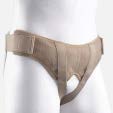
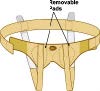
● TRUSS: Use of a truss (hernia belt) is rarely prescribed, as it is often ineffective. It may be used in patients with significant symptoms who are not candidates for surgery.
● WATCHFUL WAITING: Surgery is not advised in all cases, watchful waiting being recommended for the treatment of hernias which are not uncomfortable due to the not insignificant risk of chronic pain and the low risk of strangulation (<0.2%per year).
● SURGERY: Many hernias require a surgical procedure. As general advice in surgery, the choice of the surgeon is more important than the choice of a particular surgical technique or material.
Surgical procedures are done in one of two fashions.
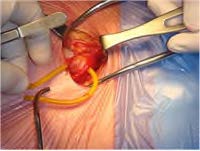
1. OPEN REPAIR: The open approach is done from the outside through a 10cm incision in the groin or the area of the hernia. The incision will extend through the skin and subcutaneous fat, which will allow the surgeon to get to the level of the defect. The surgeon will use a piece of surgical mesh to repair the defect or hole.
2. LAPAROSCOPIC REPAIR: In this approach, a laparoscope (a tiny telescope) connected to a special camera is inserted through a cannula, a small hollow tube, allowing the surgeon to view the hernia and surrounding tissue on a video screen. Other cannulas are inserted which allow your surgeon to work “inside.” Three 5mm incisions are usually necessary.
The hernia is repaired from behind the abdominal wall. A small piece of surgical mesh is placed over the hernia defect and held in place with small surgical staples.
OPEN ANTERIORMESH REPAIR DETAILS
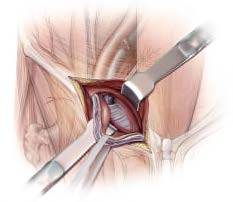 The most commonly performed inguinal hernia repair today is the Lichtenstein or open anterior mesh repair. A flat mesh is placed on top of the defect. It is a “tension-free” repair that does not put tension on muscles. It involves the placement of a mesh to strengthen the inguinal region. Patients typically go home within a few hours of surgery, or the following day and often require little pain medication. ©Compiled by the Hernia Interest Group, SASES, 2015
LAPAROSCOPIC REPAIR DETAILS
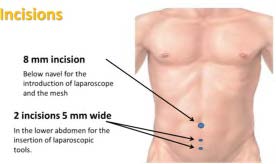
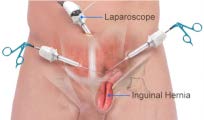
There are mainly two methods of laparoscopic repair (i) transabdominal preperitoneal (TAPP) and (ii) Totally extraperitoneal (TEP) repair. When performed by a surgeon experienced in hernia repair, laparoscopic repair causes fewer complications than Lichtenstein, particularly less chronic pain.
However, if the surgeon is experienced in general laparoscopic surgery but not in the specific subject of laparoscopic hernia surgery, laparoscopic repair is not advised as it causes more recurrence risk than Lichtenstein while also presenting risks of serious complications, such as organ injury. Many surgeons are moving to laparoscopic methodologies as they cause smaller incisions, resulting in less bleeding, less infection, faster recovery, reduced hospitalization, and reduced chronic pain. Laparoscopic Mesh Surgery, as compared to Open Mesh Surgery.
LAPAROSCOPIC SURGERY COMPARED TO OPEN SURGERY
Advantages
- Quicker recovery
- Less pain during first days
- Fewer postoperative complications
- Less risk of chronic pain
Disadvantages
- Needs highly experienced surgeon
- Longer operating time
- Increased recurrence if surgeon not experienced
- There is no difference in cost between laparoscopic and open repair as the increased costs of operation are offset by the decreased recovery period. Recurrence rates and length of the
operation are identical when an experienced surgeon performs the laparoscopy. ©Compiled by the Hernia Interest Group, SASES, 2015
WHAT ARE THE COMPLICATIONS OF HERNIA REPAIRS?
Complications of hernia surgery do occur and including minor complications may be up to 10%. They include, but are not limited to, minor bleeding, scrotal haematoma, wound infection, mesh infection, changes in skin sensation, foreign-body sensation, chronic pain, ejaculation disorders, mesh migration, formation of internal scars, damage to or erosion of mesh into abdominal organs. Such complications may only become apparent weeks or years after surgery. Recurrence of the hernia may also occur in a proportion of cases.
ARE YOU A CANDIDATE FOR LAPAROSCOPIC HERNIA REPAIR?
Only after a thorough examination can your surgeon determine whether laparoscopic hernia repair is right for you. The procedure may not be best for some patients who have had previous abdominal surgery or have underlying medical conditions.
WHAT IF THE OPERATION CANNOT BE DONE BY THE LAPAROSCOPIC METHOD?
In a small number of patients the laparoscopic method cannot be performed. Factors that may increase the possibility of choosing or converting to the “open” procedure may include obesity, a History of prior abdominal surgery causing dense scar tissue; inability to visualize organs; or bleeding problems during the operation. The decision to perform the open procedure is a judgment decision made by your surgeon either before or during the actual operation. When the surgeon feels that it is safest to convert the laparoscopic procedure to an open one, is not a complication, but rather a sound surgical judgment. The decision to convert to an open procedure is strictly based on patient safety.
WHAT SHOUD I EXPECT AFTER HERNIA SURGERY?
 Following the operation, you will be transferred to the recovery room where you will be monitored for 1-2 hours until you are fully awake. Once you are awake and able to walk and are able to freely pass urine, you may be sent home, although some hospitals keep patients overnight. With any hernia operation, you can expect some soreness mostly during the first 24 to 48 hours. You are encouraged to be up and about the day after surgery.With laparoscopic hernia repair, you will probably be able to get back to your normal activities within a short amount of time. These activities include showering, driving, walking up stairs, lifting, working and engaging in sexual intercourse. Recovery after open surgery takes a little longer, but you should be able to do most things as normal within 2 weeks. ©
WHEN SHOULD I CALLMY DOCTOR?
BEFORE SURGERY
- Severe continuous pain
- Redness of the hernia
- Increased Tenderness of the hernia
- The hernia won’t go away even with rest and gentle pressure
- The bulge is persistent and accompanied by vomiting and constipation
AFTER SURGERY
- Persistent fever over 38,5 C
- Bleeding from the wound
- Increasing abdominal or groin swelling
- Pain that is not relieved by your medications
- Persistent nausea or vomiting
- Inability to urinate
- Chills
- Persistent cough or shortness of breath
- Pus from the incision
- Redness around your incisions that is worsening
- You are unable to eat or drink liquids