All Posts in Category: History

History Timeline

300 BC – The Ancient Greeks bathe wounds in wine to prevent infection.
50 – About this time Roman physician-surgeon Aulus Cornelius Celsus died, leaving De Medicina, which described the “dilated tortuous veins” surrounding a breast cancer, causing Galen to later give cancer (Latin for crab) its name. He advised against radical mastectomy involving the pectoral muscles, and warned that surgery should only be attempted in the benign stage (rst of four).
200 – About this year Galen died after pioneering the use of catgut for suturing while he believed pus to be benecial, and viewing cancer as a result of melancholia caused by an excess of black bile, proven by its frequent occurrence in postmenopausal females, recommending surgical excision of a cancerous breast through healthy tissue to make sure that not “a single root” is left behind, while discouraging ligatures and cautery to allow drainage of black bile.
200 – About this year Leonidas of Alexandria began advocating the excision of breast cancer via a wide cut through normal tissues like Galen, but recommended alternate incision and cautery, which became the standard for the next 15 centuries. He provided the rst detailed description of a mastectomy, which included the rst description of nipple retraction as a clinical sign of breast cancer.
208 – Hua Tuo began using wine and cannabis as an anaesthetic during surgery.
1180 – Rogerius published The Practice of Surgery.
1214 – Hugh of Lucca discovered that wine disinfects wounds.
1250 Theodoric Borgognoni, student of Hugh of Lucca broke with Galen and fought pus with dry wound technique (wound cleansing and sutures).
1275 William of Salicet broke with Galen’s love of pus and promoted a surgical knife over cauterization.
1452-1519 Leonardo Da Vinci lives – he dissects some human bodies and makes accurate drawings of them.
1536 Ambrose Pare treats wounds with a mixture of egg yolk, rose oil and turpentine rather than hot oil.
1728-1793 John Hunter, the father of modern surgery, lives.
1735 Claudius Amyand performed the rst successful appendectomy.
1780 First mouth-to-mouth resuscitation performed by John Fothergill.
1794 Oxygen discovered – AL Lavoisier.
1800 The Royal College of Surgeons of England was founded.
1805 Astley Cooper pioneered ligation of arteries.
1842 – Crawford Williamson Long pioneered ether for anesthesia.
1844 – Horace Wells pioneered nitrous oxide for anesthesia.
1846 – First Operation performed under Ether anesthesia.
1848 – James Young Simpson pioneered chloroform for anesthesia.
1865 – Joseph Lister discovers antiseptic surgery.
1880 – German surgeon Ludwig Rehn performed the rst thyroidectomy.
1882 – William Stewart Halsted of Johns Hopkins Hospital performed the rst complete radical mastectomy in the US, which became the standard
treatment.
1882 – First open Cholecystectomy by Carl Langenbuch.
1890 – Rubber gloves are rst used in surgery.
1895 – Wilhelm Roentgen discovered X-rays.
1901 – German surgeon Georg Kelling performed the rst Laparoscopic surgery on dogs.
1901 – Austrian physician Karl Landsteiner discovered the basic A-B-AB-O blood types.
1903 – Dutch physician Willem Einthoven invented the Electrocardiograph.
1903 – First Radiotherapy used for cancer treatment.
1905 – Austrian surgeon Hermann Schloffer became the rst to successfully remove a pituitary tumour.
1910 – Swiss physician Hans Christian Jacobaeus performed the rst Laparoscopic surgery on humans.
1914 – Blood transfusion was pioneered. The rst non-direct blood transfusion is carried out.
1916 – Austrian surgeon Hermann Schloffer performed the rst splenectomy operation.
1949 – First Chemotherapy approved for cancer treatment.
1953 – The rst carotid endarterectomy.
1955 – The rst open Nissen – anti reux operation was done.
1963 – The rst liver transplant was performed by Thomas Starzl et al.
1967 – The rst successful heart transplant by Christiaan Barnard.
1967 – The rst successful coronary artery bypass surgery.
1969 – First Colonoscopy and Polipectomy Dr’s W Wolf & H Shinya.
1971 – First modied radical mastectomy.
1972 – The CT scan was perfected.
1974 – First chemotherapy treatment for breast cancer.
1977 – First Breast conservation surgery for breast cancer.
1985 – The rst laparoscopic cholecystectomy.

Read More

The First Laparoscopic Cholecystectomy

Prof Dr Med Erich Mühe, Germany, performed the rst laparoscopic cholecystectomy on September 12, 1985. The German Surgical Society rejected Mühe in 1986 after he reported that he had performed the rst laparoscopic cholecystectomy, yet in 1992 he received their highest award, the German Surgical Society Anniversary Award.

 
He performed 94 such procedures before another surgeon, Phillipe Mouret of Lyon, France, performed his rst laparoscopic cholecystectomy in 1987, followed by Francois Dubois of Paris, France, in 1988. In several instances, the literature gives the French credit for developing the laparoscopic cholecystectomy procedure. In 1990 in Atlanta, at the Society of American Gastrointestinal Surgeons (SAGES) Convention, Perissat, Berci, Cuschieri, Dubois, and Mouret were recognized by SAGES for performing early laparoscopic cholecystectomies, but Mühe was not. However, in 1999 he was recognized by SAGES for having performed the rst laparoscopic cholecystectomy–SAGES invited Mühe to present the Storz Lecture. In Mühe’s presentation, titled “The First Laparoscopic Cholecystectomy,” which he gave in March 1999 in San Antonio, Texas, he described the rst procedure. Finally, Mühe had received the worldwide acclaim that he deserved for his pioneering work.

Read More

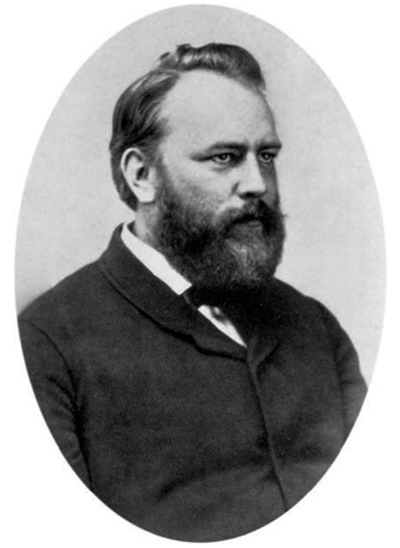
Carl Langenbuch (1846-1901)

Carl-Langenbuch

Carl Langenbuch was a German surgeon who served as a military surgeon during the Franco-Prussian war. He performed the rst cholecystectomy at the Lazarus Hospital in Berlin in July 1882 on a 43 year old male patient. This operation followed scientic experiment, careful thought, cadaver dissections and careful patient selection.
Treatment for cholecystitis before Langenbuch was stone extraction from spontaneous cutaneous biliary stula or skin incision of near-pointing empyema.
Cholecystostomy was carried out by Bobbs (1867), and championed by Kocher (1878). Langenbuch carried out a cholecystectomy in 1882 subsequently recommended choledochotomy, duodenotomy and sphincterotomy in the management of stones in the bile ducts.


He also carried out one of the earlier major right liver resections in 1888. The surgical world owes Langenbuch proper acknowledgement for his contribution to hepatobiliary surgery. He died in 1901 from peritonitis caused by a raptured appendix .

Read More

Rudolph Nissen (1896 – 1981)

Rudolph-Nissen

Rudolph Nissen was a surgeon who chaired surgery departments in Turkey, the United States and Switzerland. The Nissen fundoplication, a surgical procedure for the treatment of gastroesophageal reux disease (heartburn), is named after him. In 1948, he performed an abdominal surgery that extended the life of Albert Einstein by several years.

Dr. Rudolph Nissen (1896–1981) rst performed the procedure in 1955 and published the results of two cases in a 1956 Swiss Medical Weekly. Nissen originally called the surgery “gastroplication.” The procedure has borne his name since it gained popularity in the 1970’s Einstein’s aneurysm repair.

In December 1948, Nissen admitted Albert Einstein to a Jewish Hospital for removal of intestinal cysts. However, the scientist was also suffering from an abdominal aortic aneurysm (AAA). An aneurysm is a dilatation that occurs in a blood vessel. In the portion of the aorta that runs through the abdomen, aneurysms are typically asymptomatic until rupture is imminent. AAA rupture can cause immediate death from exsanguination (massive blood loss). Denitive surgical treatment for AAA had not been devised in the 1940s.

Beginning in 1943, reinforcement with cellophane had been used to induce brosis in the vessel, decreasing the risk of rupture. Nissen wrapped the aneurysm with cellophane and Einstein recovered from the surgery.

Upon his hospital discharge, Einstein was surrounded by photographers and he was photographed with his tongue sticking out at them. He sent an autographed newspaper clipping of the photo to Nissen with the inscription “To Nissen my tummy / the world my tongue.” Einstein lived for several years after Nissen wrapped his AAA in cellophane. Einstein died in a Princeton, New Jersey hospital in 1955. An autopsy conducted by pathologist Thomas Harvey showed that he died of a leaking AAA.

By the time of Einstein’s death, surgical AAA repair was technically possible but still very uncertain. The surgeon who saw Einstein in Princeton, Dr Frank Glenn of New York Hospital, proposed surgery. Einstein was in his seventies and he elected to die peacefully rather than undergo surgery. “I want to go when I want,” Einstein told his physicians. He told his secretary Helen Dukas, “I can die without the help of the doctors.” He also told her that it was “tasteless to prolong life articially. I have done my share. It is time to go. I will do it elegantly.”

Read More

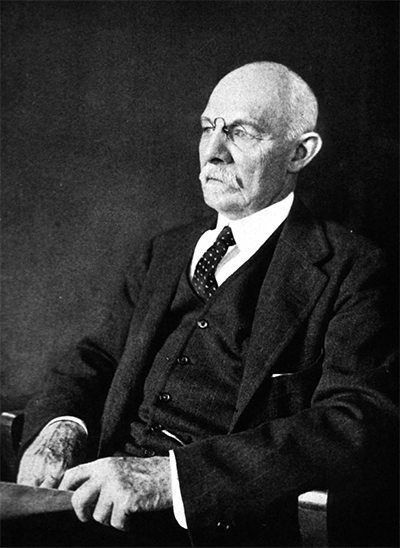
William Stewart Halsted, M.D. (1852 – 1922)

William-Stewart-Halsted

William Stewart Halsted was an American surgeon who emphasized strict aseptic technique during surgical procedures, was an early champion of newly discovered anesthetics and introduced several new operations, including the radical mastectomy for breast cancer.

Along with William Osler, (Professor of Medicine), Howard Atwood Kelly, (Professor of Gynecology), William H Welch, (Professor of Pathology)
Halsted was one of the “Big Four” founding professors at the Johns Hopkins Hospital.

Throughout his professional life, he was addicted to cocaine and later also to morphine, which were not illegal during his time. The addictions were a direct result of Halsted’s use of himself as an experimental subject, in investigations on the effects of cocaine as an anesthetic agent.

History of mastectomy – before and after Halsted.

The operation described by Halsted, in 1894 and called radical mastectomy, represents a milestone in the treatment of breast cancer. It consisted of removal of the breast, muscles and axillary lymph nodes. The pre-Halsted era saw attitudes ranging from the wilful abstention to brutal treatments by cauterization or amputation. The introduction of anaesthesia and asepsis enabled more advanced surgical attempts. The stratication of patients into operable and nonoperable categories has improved surgical outcome. After attempts to extend Halsted procedure (by extended or super-radical mastectomies) proved to be of little benet, a minimally-invasive trend emerged gradually. It started with modied radical mastectomy that spares the muscles and was then followed by breast conservative surgery that leaves breast tissue behind.

Read More

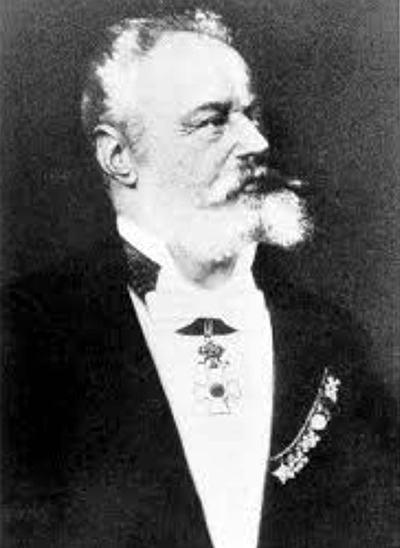
Theodor Billroth (1829 – 1894)

Theodor-Billroth

Theodor Billroth was a Prussian-born Austrian surgeon and amateur musician.
Surgery
As a surgeon, he is generally regarded as the founding father of modern abdominal surgery.
As a musician, he was a close friend and condant of Johannes Brahms.
Torn between a career as a musician or as a physician, he acceded to his mother’s wishes and enrolled himself to study medicine.
An early adopter of the “white coat ” Billroth was directly responsible for a number of landmarks in surgery, including the rst esophagectomy (1871), the rst laryngectomy (1873), and most famously, the rst successful gastrectomy (1881) for gastric cancer, after many ill-fated attempts. Legend has it that Billroth was nearly stoned to death in the streets of Vienna when his rst gastrectomy patient died after the procedure. He was the rst surgeon to excise a rectal cancer and by 1876, he had performed 33 such operations.
Music
Billroth was a talented amateur pianist and violinist. He met Brahms in the 1860s, when the composer was a rising star of the Viennese musical scene. They became close friends and shared musical insights. Brahms frequently sent Billroth his original manuscripts in order to get his opinion before publication, and Billroth participated as a musician in trial rehearsals of many of Brahms’ chamber works before their rst performances. Brahms dedicated his rst two string quartets, Opus 51, to Billroth. Billroth started an essay called “Wer ist musikalisch?” (“Who is musical?”) which was published posthumously by Hanslick. It was one of the earliest attempts to apply scientic methods to musicality. In the essay, Billroth identies different types of a musicality (tone deafness, rhythm-deafness and harmony-deafness) that suggest some of the different cognitive skills involved in the perception of music. Billroth died in Opatija, Austria-Hungary, before he could complete the research.
Excelling at both his vocation and his avocation, Billroth never saw science and music as being in conict. On the contrary, he considered
the two to complement each other. “It is one of the supercialities of our time to see in science and in art two opposites,” he wrote in a letter. “Imagination is the mother of both.”

Read More

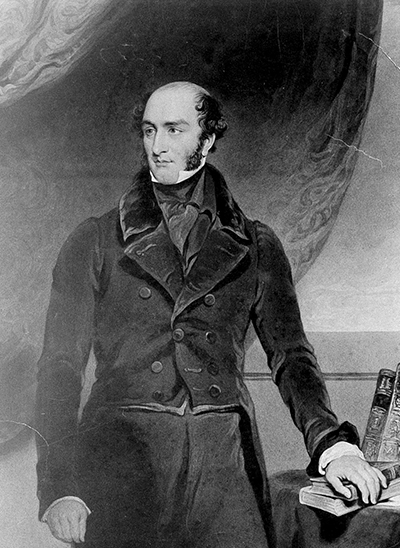
Robert Liston (1754-1847)

Robert-Liston

“Time Me, Gentlemen, Time Me”
The Fastest Surgeon of the 19th Century

Dr. Robert Liston was known both for his showmanship and his effectiveness. Before anesthesia, speed was essential to minimizing pain and improving odds of survival. Imagine lying on a table in an old-school operating room. Faces stare down at you from the viewing galleries above, and your leg throbs with pain from a broken bone – infection is just starting to set in. The door opens and three men in blood-stiffened aprons walk in, carting a collection of knives and saws. Two of them grab your shoulders and arms and pin you to the table. The third picks out one of the knives from the cart.
“Time me, gentlemen,” he calls out to the gathered spectators. “Time me.”
The man grabs your leg and begins to cut just below the knee. He continues to hold onto your leg as one of his lackeys gets a tourniquet around it. To free his cutting hand, he clasps the bloody knife in his teeth and picks up a saw. He cuts back and forth through the bone, drops the severed leg into a bucket lled with sawdust, and sews you up, to the applause of the men sitting in the wings. As promised they’ve timed the whole procedure — from rst incision to clipping the loose threads on the sutures — at just two and a half minutes.
In his most famous mishap, he was moving so fast that he took off a surgical assistant’s ngers as he cut through a leg.
The man who just ew through your amputation with apparent reckless abandon was Dr Robert Liston, one of the nest surgeons of the time.
Dr Richard Gordon, a surgeon and medical historian, calls Liston the “fastest knife in the West End.” His style may have seemed careless, but in the age before anaesthesia, speed was essential to minimizing the patient’s pain and improving their odds of surviving surgery.
Slower surgeons sometimes had pain-wracked and panicked patients wrestle free from their assistants and ee from the operating room. Only about one of every 10 of Liston’s patients died on his operating table at London’s University College Hospital. The surgeons at nearby St. Bartholomew’s, meanwhile, lost about one in every four.
Liston’s quick hands were so sought after, patients sometimes had to camp out in his waiting room for days, waiting for their turn to see him. Liston tried to see every last one of these patients, no matter their condition. He especially loved treating those cases that his fellow surgeons had dismissed as beyond help, which earned him a reputation among colleagues, as being showy.
Occasionally, Liston’s speed and showmanship actually were a hindrance to his operations. Once, he took a patient’s testicles off along with the leg that was being amputated. His most famous (and possibly apocryphal) mishap was the operation where he was moving so fast that he took off
a surgical assistant’s ngers as he cut through a leg and, while switching instruments, slashed a spectator’s coat. The patient and the assistant both died from infections of their wounds, and the spectator was so scared that he’d been stabbed that he died of shock. The asco is said to be the only known surgery in history with a 300 percent mortality rate.
Liston had more going for him than just a quick and (mostly) steady slice, though. He was a highly-regarded surgical instructor and prolic inventor. Some of his creations, like the “Liston splint” and “bulldog” locking forceps, are still around today.
Towards the end of his career, Liston made medical history and performed a surgery that made his nimble hands obsolete in Britain. From that point on, pain would no longer be a hurdle to successful surgery, and speed wouldn’t be the surgeon’s greatest asset.
In 1846, Liston received a patient named Frederick Churchill, whose right knee had been causing him terrible problems for years. None of the treatments he’d been given before had worked, and now the only option was amputation. The day of the surgery, Liston walked into the operating
room and, instead of grabbing a knife and asking his audience to time him, he pulled out a jar. Ether, American dentists and doctors had recently demonstrated, could be used as a surgical anaesthetic. “We are going to try a Yankee dodge today, gentlemen,” Liston told the crowd, “for making men insensible.”
Liston’s colleague, Dr William Squire, administered the anaesthesia. He held a rubber tube to Churchill’s mouth so he could inhale the ether, and after a few minutes, he was out. Squire placed a handkerchief laced with more of the stuff over Churchill’s face to keep him that way, and then Liston began the operation.
A mere 25 seconds later, the amputation was complete. Churchill roused a few minutes later and reportedly asked when the operation was going to begin, to the amusement of the audience.
Liston died in a sailing accident, still the fastest knife London had ever known.

Read More